A small capital you can cross on foot in twenty minutes, shaped by one architect, one river and a castle on a wooded hill.
- Region Ljubljana
- From Ljubljana You are already here
- Bring Comfortable shoes and a light rain jacket
Local note: The old town centre is largely closed to cars. Park outside the core or arrive by train or bus, then walk everything; distances are short.
Ljubljana is small enough that you rarely need a map for long. The old town runs along both banks of the Ljubljanica, a slow green river that bends below the castle hill, and almost everything worth seeing sits within a short walk of the water. Cafe tables line the embankments, bikes outnumber cars in the centre, and the main sights are close together, which makes the city an easy first or last stop on a trip round Slovenia.
Plečnik's city
Much of what you notice in the centre comes from one man. Jože Plečnik, an architect born in Ljubljana, spent the years between the two world wars reshaping his home town: its embankments, bridges, squares, a market colonnade, a library and a long line of tree-planted walks. His style mixes classical columns, obelisks and lamps with a playful sense of scale, and once you learn to spot it you see it everywhere.
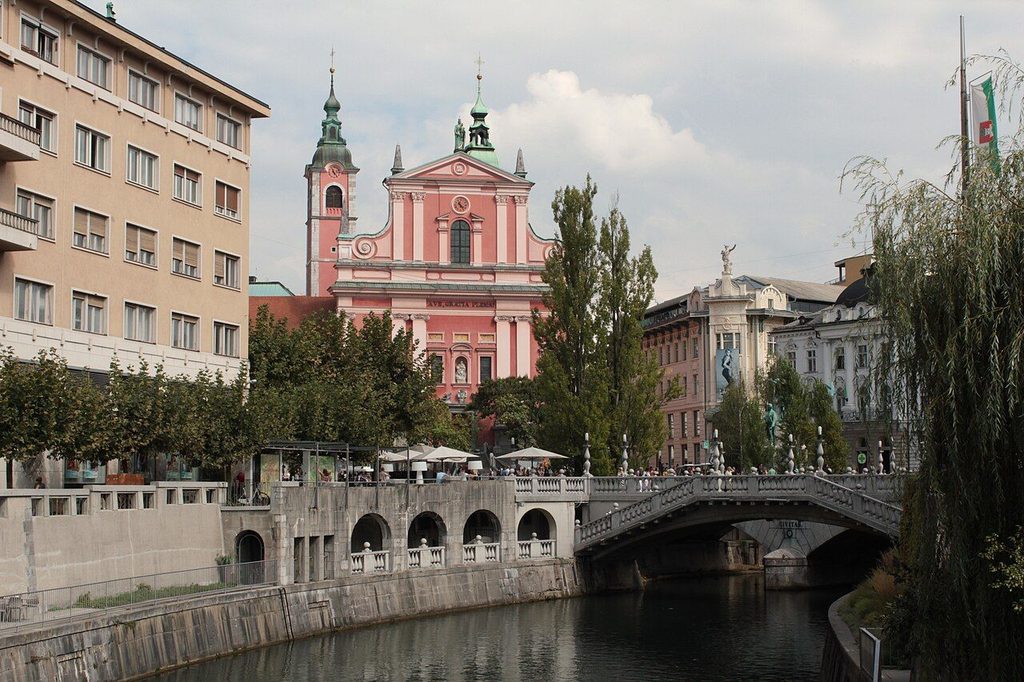
The best place to start is Prešeren Square, named after France Prešeren, the national poet, whose statue faces the pink Franciscan Church of the Annunciation. In front of it, the Triple Bridge (Tromostovje) fans out over the river. The middle span is older; Plečnik added the two side bridges for pedestrians, with stone balustrades and steps down to the water.
From there you can follow the river in either direction. Downstream, Plečnik's market colonnade runs along the bank, and the open-air central market fills the square behind it on most mornings except Sundays. Just beyond, the Dragon Bridge (Zmajski most) has four bronze dragons, the city's emblem, guarding its corners. Upstream, the Cobblers' Bridge (Šuštarski most) and the embankments lead towards the quieter districts of Krakovo and Trnovo.
A walk through the old town
The old town is a narrow strip between the river and the castle hill, split into three historic squares: Mestni trg, Stari trg and Gornji trg. Baroque fronts, courtyards and small passages fill the space, and the Robba Fountain stands in front of the town hall. St Nicholas's Cathedral, with its green dome, sits close to the market and is worth a look inside for its painted ceilings.
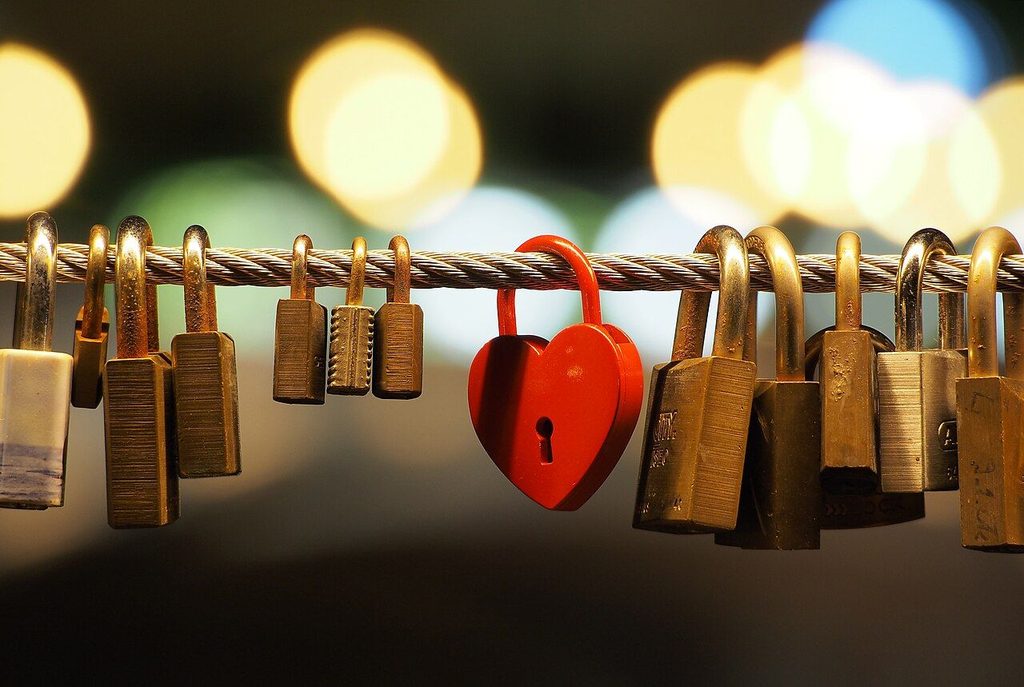
Butchers' Bridge (Mesarski most) is a newer crossing between the market and the old town, with glass panels in the deck and bronze sculptures on the rails. Couples have hung padlocks on its cables for years, and the city clears them from time to time.
Walk south along Gornji trg and you reach Trnovo, a calmer residential area where Plečnik lived. His house there is now a museum, open for guided visits in small groups. On the way back, the National and University Library is another of his buildings, with a facade of rough stone and brick.
Next door: Lake Bled beyond the postcard
Up to the castle
Ljubljana Castle sits on the wooded hill above the old town. You can walk up by several paths in fifteen to twenty minutes or ride the funicular from near the market. The courtyard is free to enter, while the tower, exhibitions and some other parts need a ticket.
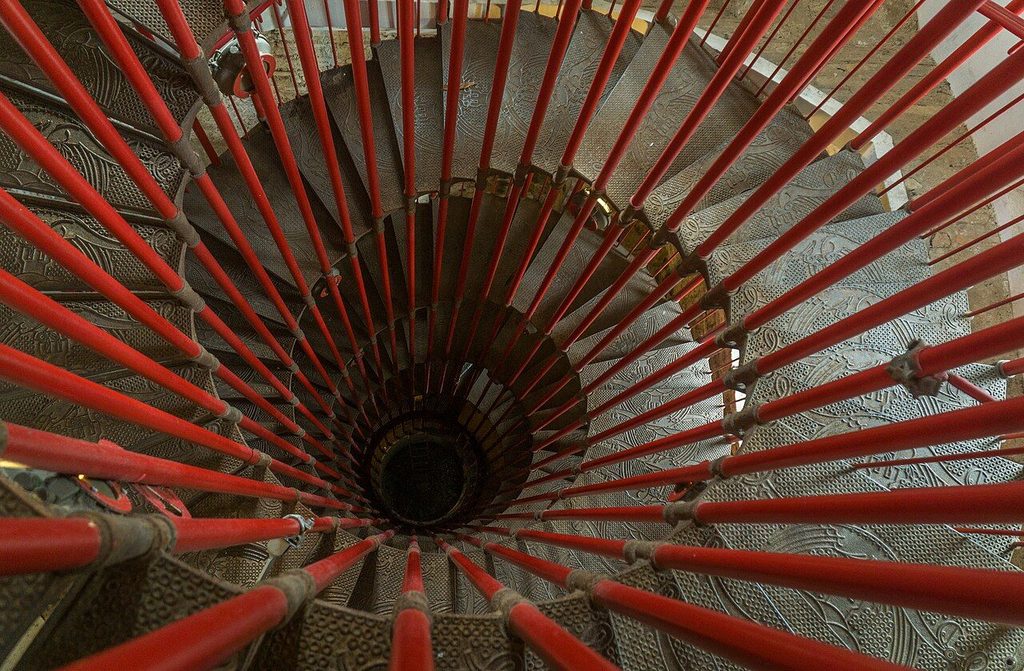
The view from the top takes in the red roofs of the old town, the river and, on clear days, the Kamnik-Savinja Alps to the north. Inside the lookout tower, a double spiral staircase lets people going up and coming down pass without meeting.
The castle grounds also have shaded paths that loop round the hill, a quiet alternative to the crowds in the old town below on a summer afternoon.
Parks and the slower side
Tivoli Park starts close to the centre and stretches west into the forested Rožnik hill. Plečnik's Jakopič promenade runs through it, and on summer weekends the outdoor photo displays there draw a steady stream of walkers. Rožnik is a pleasant climb if you want a short hike without leaving the city.
In the evening the riverbanks fill up. People sit on the steps down to the water, and the bridges glow under lamps. The city is lively but rarely loud, and it feels safe and relaxed to walk around after dark.
Two days on foot from Prešeren Square
- The centre is compact. Two days let you see the main sights at an easy pace; one full day covers the essentials.
- The train and bus stations sit next to each other, about fifteen minutes on foot from Prešeren Square.
- Ljubljana works well as a base. Buses and trains run to Bled, and the Karst caves are about an hour away by road. The coast at Piran is a longer but simple trip.
- Many museums close one day a week, often Monday.
- Tap water is good to drink, and there are public drinking fountains in the centre.
From Ljubljana you can also head into the mountains. Lake Bled is close, and Lake Bohinj lies a little further into the Julian Alps. With a car, the route over the Vršič pass into the Soča valley makes a long but rewarding day.