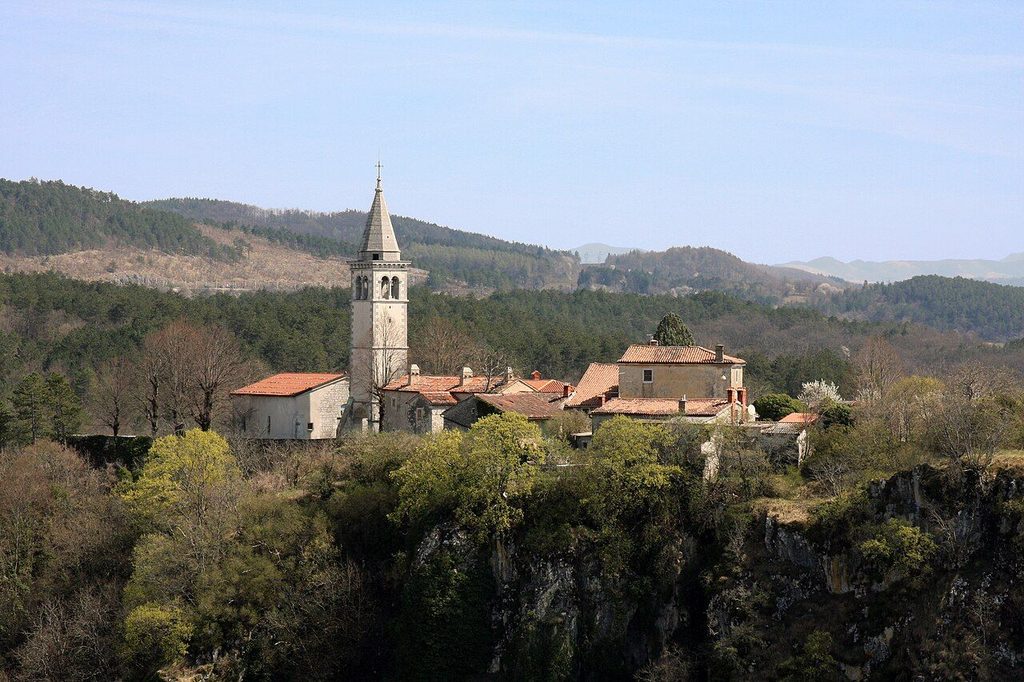
Under the dry limestone plateau of the Karst, rivers vanish into the ground and carve halls large enough to hold a cathedral. Three sites show you how.
- Region Karst
- From Ljubljana About an hour by car
- Bring Warm jacket, closed shoes, a little patience
Local note: Inside the caves it stays cool all year, around ten to twelve degrees. Bring a warm layer even in August, and shoes with good grip for wet steps.
The word karst, now used by geologists everywhere, comes from this corner of Slovenia, the Kras plateau between Ljubljana and the sea. Here rain soaks through limestone instead of running off it, and whole rivers disappear underground, dissolving caves, shafts and long tunnels as they go. Thousands of caves are known in Slovenia. Three sites close together give you a clear picture of this hidden landscape: the river canyon of Škocjan, the show cave of Postojna and the castle of Predjama.
Škocjan Caves
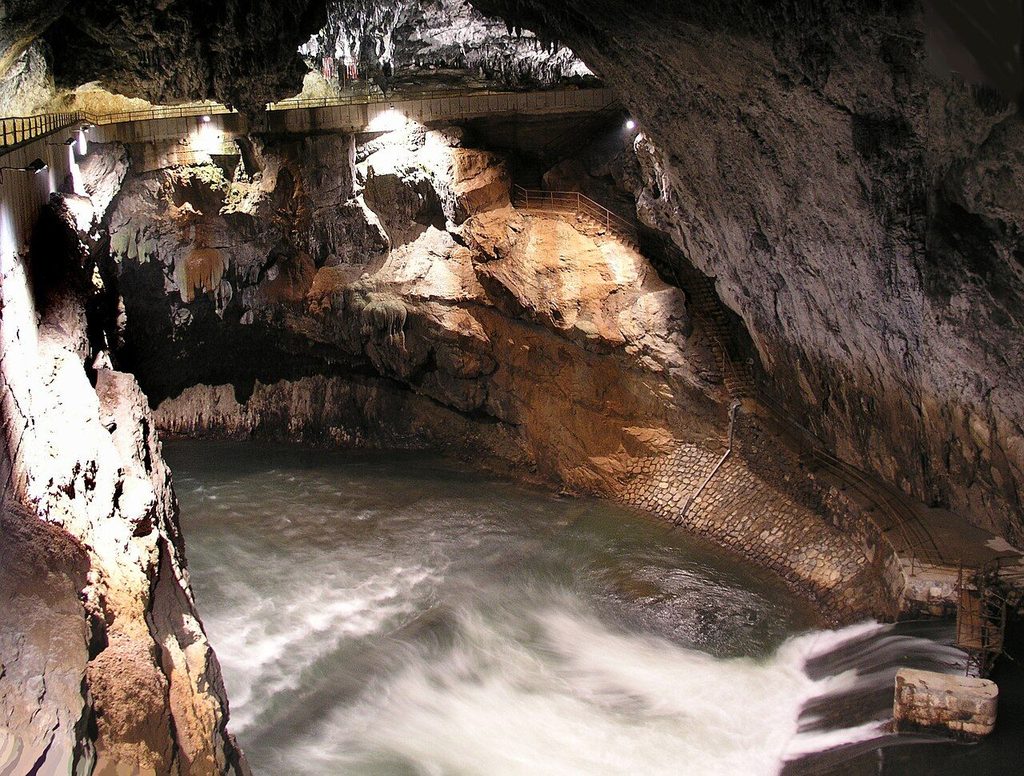
The Škocjan Caves are a UNESCO World Heritage Site and the most impressive of the three. The Reka river, after flowing on the surface from the hills to the southeast, plunges here into a gorge and continues underground. It has carved one of the largest known underground canyons in the world.
Visits are guided. The usual route starts in quieter, dry passages hung with stalactites and stalagmites, then opens suddenly into the Murmuring Cave. Far below, in the dark, you hear the river before you see it. A narrow bridge crosses the canyon high above the water, and the path follows ledges cut into the wall. The scale is hard to take in: the walls rise well over a hundred metres in places.
A second route follows the collapse dolines on the surface, where the river first goes underground. The small village of Škocjan stands on the edge of these deep hollows, and paths with steps and viewpoints lead round them.
Photography is restricted inside the underground canyon. Expect many steps, some of them wet, and a walk of a couple of hours.
Postojna Cave
Postojna Cave is the best-known show cave in Slovenia and one of the most visited in Europe. Its passages run for more than twenty kilometres, carved by the Pivka river, and a small electric train carries visitors deep inside before the walking part of the tour begins. The formations are dense and varied: white columns, curtains, thin straws and pools.
Next door: Piran on the Adriatic
The cave is also home to the olm, a pale, blind amphibian that lives only in dark water in caves of the Dinaric karst. Locals once called it the human fish because of its skin. You may see one in a tank on the tour.
Postojna is busy, especially in summer, with large groups and fixed tour times. It is set up for crowds, and the visit is well organised. If you want a quieter, wilder cave, choose Škocjan; if you want the classic decorated show cave with an easy walk, Postojna suits you. Combined tickets with Predjama exist.
Predjama Castle
About ten kilometres from Postojna, Predjama Castle stands in the mouth of a cave halfway up a sheer cliff. Its white walls seem to grow out of the rock. The site was fortified in the Middle Ages, and the castle you see today dates mostly from the sixteenth century.
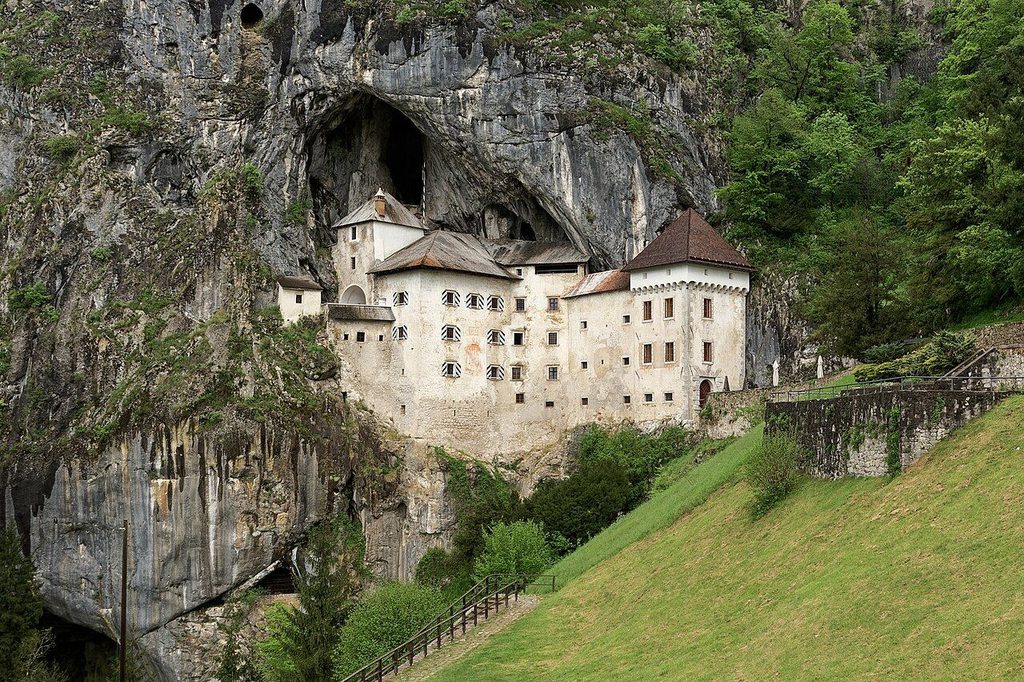
Its best-known story belongs to Erazem of Predjama, a fifteenth-century knight who fell out with the emperor and held out here under siege for months. Legend says he was supplied through a secret passage in the cave behind the castle, and that he met his end when betrayed at an unlucky moment. Inside, rooms are furnished to suggest castle life, and the passages lead back into the rock. The cave below the castle can be visited in summer on separate tours.
Planning a day in the Karst
- Škocjan and Postojna are about half an hour apart by motorway. Seeing both in one day is possible but tiring; Postojna and Predjama pair more easily.
- The nearest station for Škocjan is Divača, on the line from Ljubljana to the coast, with a walk or shuttle to the caves.
- Slovenian motorways need a vignette for cars; buy it before you drive on them.
- The Karst plateau above ground has stone villages, vineyards and dry-cured ham, and makes a calm stop on the way to the sea at Piran.
If you have more time, the caves sit between the Alps and the coast, and work well as a stop on a loop from the Soča valley down to the Adriatic.