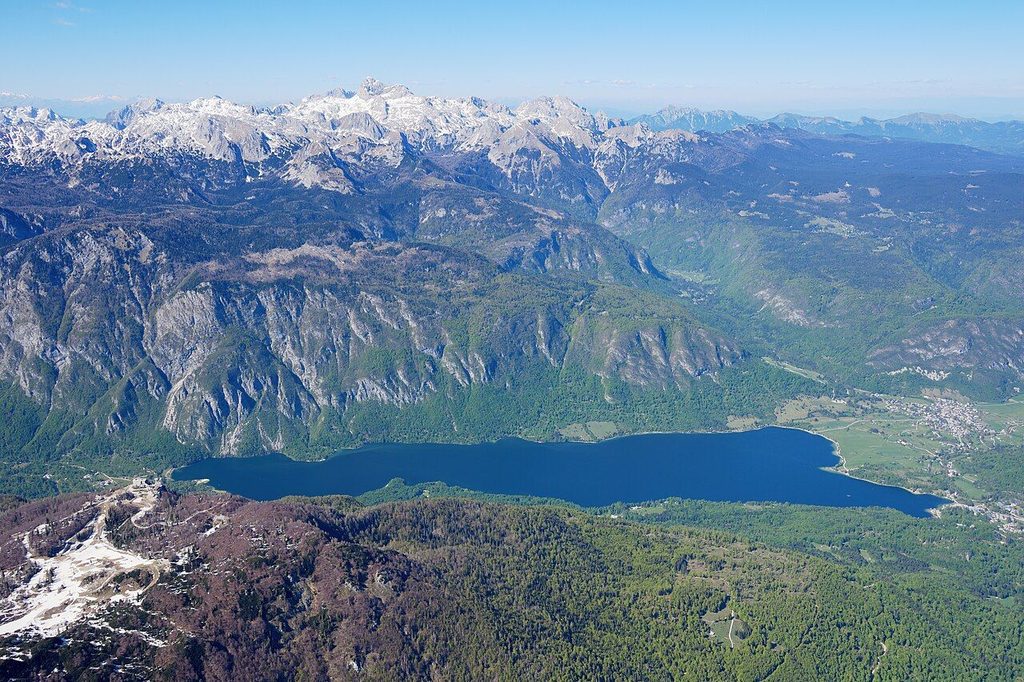
Larger, cooler and quieter than Bled, Lake Bohinj lies deep in Triglav National Park, with steep walls on three sides and a waterfall at its head.
- Region Bohinj
- From Ljubljana About ninety minutes by car
- Bring Layers, rain jacket, hiking shoes, water
Local note: Mountain weather turns fast. Afternoon storms are common in summer, so start walks early, carry a rain layer and check the forecast before going higher.
Lake Bohinj is about half an hour beyond Bled, and it feels like a different country. It is the largest permanent lake in Slovenia, roughly four kilometres long, with steep forested slopes rising on three sides and almost no building on its shore. The water is cold and very clear, and motorboats are not allowed, so the loudest sound on a calm morning is often a cowbell from the meadows.
The lake and its villages
The eastern end of the lake is where most people arrive. At Ribčev Laz a stone bridge crosses the outflow beside the small Church of St John the Baptist, whose walls carry medieval frescoes. A statue of the Zlatorog, the golden-horned chamois of local legend, stands nearby. Stara Fužina, just north, is an old farming village of stone houses and hay racks, the wooden kozolci that you see all over this valley.
The western end, Ukanc, is quieter still, with campsites, forest and the start of the road to Savica falls and the Vogel cable car. A path runs along the north shore between the two ends; walking it one way and taking the bus back is an easy half day.
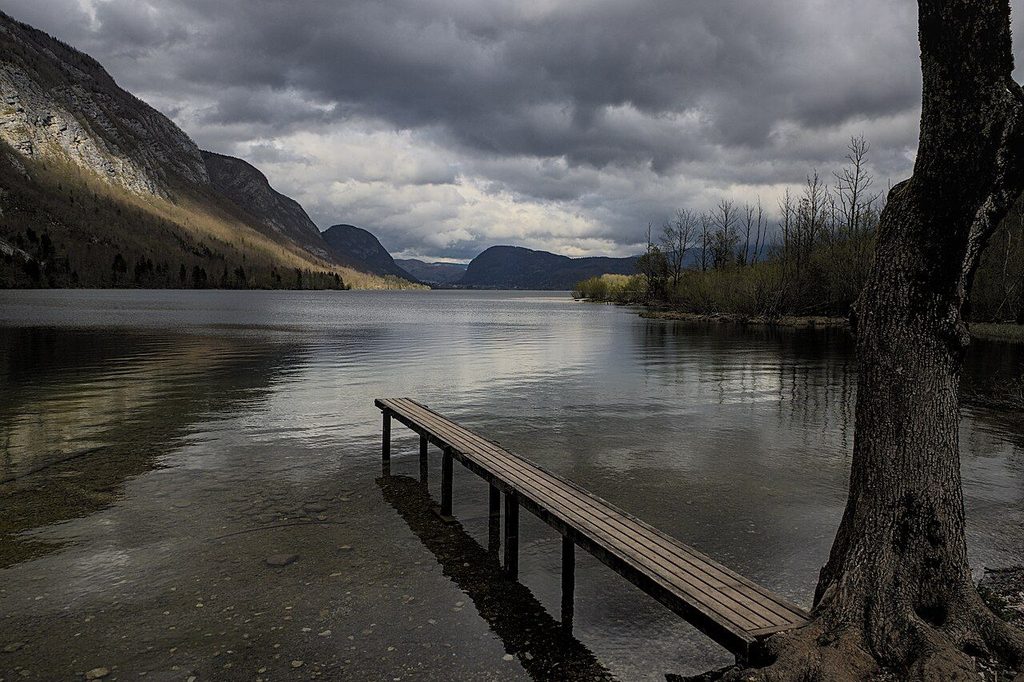
Swimming is possible in summer from the pebble beaches on the north and east shores, but the lake is fed by mountain water and stays cool even in August. Kayaks and stand-up paddleboards are common on the water. Respect any marked protected zones near the shore.
Savica falls
Above Ukanc, Savica falls drops in a narrow white ribbon from a cleft in the cliff into a green pool. The water comes from the Triglav Lakes Valley high above, surfacing here after flowing underground. From the car park, a path with several hundred steps climbs through the forest to a viewing hut; allow about twenty minutes up.
The falls are open to visitors in the warmer months, with an entry fee. Paths can be wet and slippery, and good shoes help.
Triglav National Park
Bohinj lies inside Triglav National Park, the only national park in Slovenia. It covers much of the Julian Alps and takes its name from Triglav, at 2,864 metres the highest mountain in the country and a national symbol that appears on the flag and coat of arms. You see its three-headed summit from many points around the lake on clear days.
Next door: The Soča valley
The park has walks for every level. The Mostnica gorge near Stara Fužina is a short, family-friendly walk past potholes and small waterfalls; there is usually a small entry fee in season. Longer days lead to mountain pastures such as Planina Blato, or up the steep path towards the Black Lake (Črno jezero) and the Triglav Lakes Valley. These are serious mountain walks, needing proper boots, a map and an early start.
Park rules aim to protect plants, animals and the quiet. Stay on marked paths, take your rubbish with you, do not pick flowers and do not camp outside official sites. Drones are restricted.
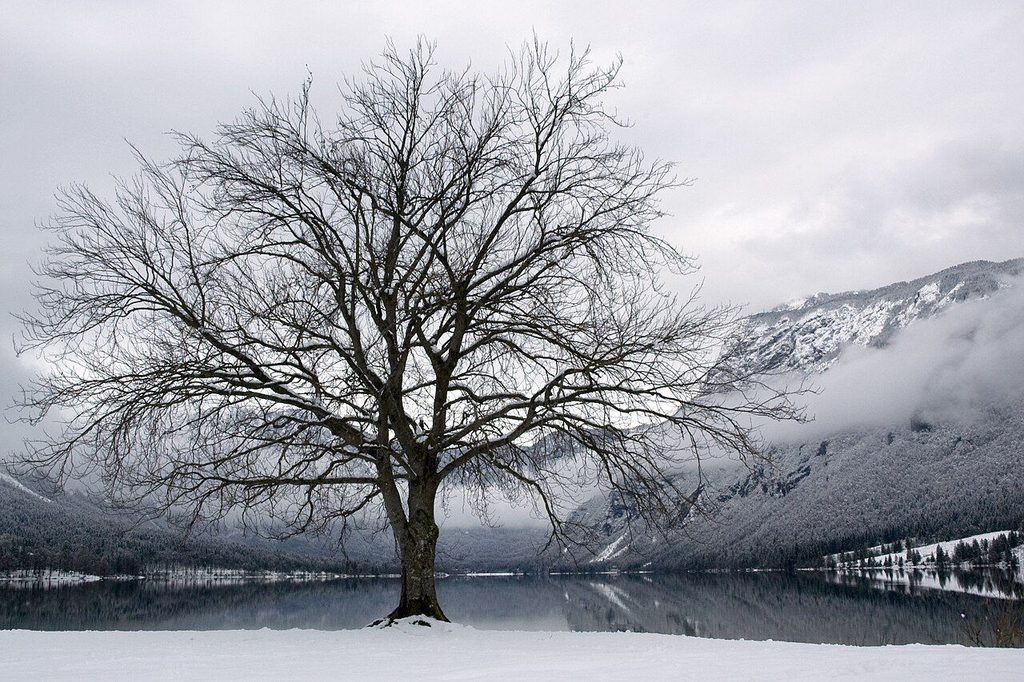
In winter, snow comes down to the lakeshore and the whole basin turns grey and white. Some paths close, but the lake walk stays open and the valley is at its most peaceful.
The cable car to Vogel
A cable car rises from near Ukanc to the Vogel plateau, more than a thousand metres above the lake. The upper station has a terrace with a wide view across the lake to Triglav. In summer it is the start of high walks along the ridges; in winter Vogel is a ski area. The cable car closes for maintenance at times in spring and autumn.
Bus from Bled, car train to Most na Soči
- Buses run from Ljubljana through Bled to the lake. By car, the drive from Bled takes about half an hour.
- The Bohinj railway stops at Bohinjska Bistrica, a few kilometres from the lake. A car-carrying train runs through the tunnel to Most na Soči, a handy shortcut to the Soča valley when the Vršič pass is closed.
- Parking by the lake is charged in season, and a summer bus links the villages around the lake.
- Combine the trip with Lake Bled on the way in or out.